Thursday, February 25, 2010

An Inconvenient Truth documentary/film

The film "An Inconvenient Truth" with Al Gore is definitely a film to see. It is an eye-opener that can hopefully convince skeptics on the effects of climate change. Most effective are the snap shots of before and after for melting snow such as at Mt. Kilimanjaro. Whether actual true footage or not (I had heard that some of the filmis "embelished"), the images are shocking. In this film the mention of the polar bears and their lack of sea ice was also definitely a topic that people should know more about. It was a minor mention, but important nonetheless. Al Gore is a very good speaker, which keeps your attention throughout the whole film. Using a bit of shock tactics is necessary in climate change issues, as people just won't get it otherwise. Humans have been causing for increased Greenhouse Gas emissions, and Gore's major point is that we need to smarten up start reversing the damages otherwise the world as we know it will be changed. Sea levels will rise, weather systems will change, all facts that were included in the IPCC report previously reviewed. What Gore is trying to get across to people is that the change is happening as we speak and is real. Gore has been concerned with climate change as a student, and with mentor Roger Revelle's help he has built up a strong argument for change. He wants people to chose to make the change and to know that we have the power to do so.

Wednesday, February 24, 2010

Summary - Selection 26


Climate Change 2007: The Physical Science Basis by The Intergovernmental Panel on Climate Change (IPCC)
Compiled of many facts and figures, the IPCC report on Climate Change 2007 indicates and affirms many worries of climate change. Mostly being anthropocentrically caused, there is much to be concerned about. Primarily the greenhouse gases such as carbon dioxide, methane, water vapour and nitrous oxide, are great causes in
climate change which is global warming and cooling. It is obvious throughout the report that the common trend is increased atmosphere toxicity as well as increased change to our water sources, weather patterns, and global temperature. Our continued use of fossil fuels are contributing to glaciers melting, sea level rise, increased temperature, increased precipitation as well as decreased precipitation, and changes in wind patterns and storms. Added freshwater and increased temperatures to our ocean effects the currents, tropical storms, and sea level rise, depending on latitude.

We are on a path to self destruction, and even if we plateau at our current levels our planet it still going to be in a state of great change. CO2 levels are likely to continue to rise, glaciers and ice caps are likely to melt, temperatures and weather will likely change as well. The IPCC believe that regardless of the theories out in the world, all variability in the climate systems prior to 1950 were of natural events, further reinforcing that the changes happening in only the last 50 years are very significant to our future. They are projecting that warming will be greatest over land and at high latitudes, snow cover will contract, sea ice could shrink in the Arctic and Antarctic, tropical cyclones will intensify, storm tracks will move poleward with changes in wind, and ocean circulation will change. It will take a long time to reverse what humankind has done to the planet, change must happen immediately and everyone needs to get on board.

Tuesday, February 23, 2010

Summary - Selection 4

A Sand County Almanac by Aldo Leopold

The first part of Leopolds article is mainly about his realization of the connectedness that everything had, and how valuable everything is to maintain an ecosystem. Ethics are important, according to Leopold, as they contribute the a symbiosis. As population increases, so does the complexity of life. Two types of ethics are considered, first he mentions an ecological standpoint as "a limitation on freedom of action in the struggle for existence". The other is a philosophical view, which is defined as "a differentiation of social from anti-social conduct." Because land is viewed as property people are having problems viewing the land as anything but. Free land does not have to be used up for our purposes, and a community effort should be considered in preserving the "integrity, stability, and beauty of the biotic community." A good point raised by Leopold is that are not solely individuals on this earth, but interconnected with each other with certain levels of co-operation. We should be expanding our views beyond just people, to all living organisms that are part of the land. People need to evolve in our views on this planet and go beyond our vision of the land being simply a place to put our "things".

I did not like that the first part of this article was about Leopold's wolf kill. I know it was for effect, but as a whole, I don't think it really added to his argument. Yes, it was his turning point, his realization that every part of the Earth was connected somehow and that it was worth preserving, but it was sad and not necessary. I am not a fan of hunting animals, especially if it is a wolf with her baby cubs around her. Aside from the inhumanity, as I stated before his article would have been equally effective without the killing. Otherwise, his view in the connectedness of people all other forms of living and non living things in this world is something that people should think about in their daily decisions.

Monday, February 22, 2010

Summary - Selection 3

Principles of Conservation by Gifford Pinchot

Pinchot describes three basic principles in order to conserve our valued resources. Firstly, he discusses that development is key. Because we are working to sustain our resources for future generations, developing new ways to do so and even preserve energy sources such as coal. Next he briefly discusses the prevention of waste. We have the knowledge to stop waste and destruction of natural resources, as we have in the past demonstrated interference with natural occurrences (for better and for worse) The example Pinchot uses is human interference with forest fires, as before we had the knowledge and capacity to put them out, they would normally have just burnt. Education is very important in these processes as once knowledge is attained then our means to prevent waste of natural resources is more efficient and effective. Thirdly, because natural resources are for all to share and not just for a few, tying in the principles together for the greater good of all people is key. Pinchot believes that common sense is required in tying foresight, prudence, thrift, and intelligence together how they are dealt publicly and privately.

Saturday, February 20, 2010

Summary - Selection 16


Reinventing the Energy System by Christopher Flavin and Seth Dunn

The big message for this selection is that the world needs to move away from out current energy resources and work toward the renewable resources, becoming more sustainable and environmentally friendly. Fossil fuels such as coal, oil, and natural gas, should no longer be considered options, and we should be looking toward the more abundant ones such as the sun, wind and others. It would be a big move for humankind to move away from the fossil fuels, as we cannot be sustained on them for much longer. Considering that we have already used up 800 billion barrels of oil out of 1 trillion, which means half has already been used up.

The pollution caused by burning fossil fuels is incredible, as well as the destruction to land for extraction in oil or coal mining. Flavin and Dunn state that "human activities could be ending the period of relative stability that has endured over the pat 10,000 years...", backing up that climate change his human induced. Now is the opportunity to use the technologies for the renewable resources, especially for developing countries. Wind and sun power are so easily available for developing countries that it would make the most sense to start with those instead of supplying fossil fuels for energy. Solar energy costs are lowering as technology advances, and same goes for the continued advancement in wind and hydrological energy as well. Leaders such as Germany, Japan, and the United States are great examples of advancing technologies, but Flavin and Dunn also belive that a country does not have to be large or powerful to bring into place leading technologies for accessing wind power etc. (Image taken from http://commercialsolarpros.com)

Simple changes can be made without sacrificing lifestyle. People need to make efforts in these minor changes to help toward sustaining our future, as well as the future peoples of our world. Flavin and Dunn believe that energy is something to be valued and respected, and the sooner the better to make these changes.

Monday, February 15, 2010

Summary - Selection 15

More Profit with Less Carbon by Amory B. Lovins

A common misconception is that protecting our climate will force us to chose the environment or the economy. As Lovins argues, climate protection can reduce costs and save major energy and money in long run. "Saving fuel is a lot cheaper than buying it" says Lovins pg. 65. It is true, and many major companies have demonstrated environmental energy saving tactics that have saved billions of dollars and drastically reduced carbon emissions. Even oil companies are joining up, and Lovins uses the example of BP that met it's carbon emissions reduction goal of 2010 in 2001, saving $650 million over 10 years. Along with cost savings, higher productivity and higher efficiencies in factories.
A lot of energy is being wasted in the U.S., especially for home electronics being left on or left plugged in. Energy gets wasted every day without people realizing the benefits of improving their energy efficiency with upgraded products or simple steps. In doing so, it would be a key part in helping stop climate change. Changes in fuel sources to natural gas or solar and wind power would be major steps as well. Today, energy-efficient products are more easy to come by and a lot more acceptable for people and major corporations. Making big changes and putting out the money ahead of time is cheaper than many small changes in the long run.
Transportation is also a huge contributor to carbon emissions, and simple changes in the vehicles we drive will lower emissions as well. Lovins say that in just combining lightweight materials with innovations in propulsion and aerodynamics could cut oil use in cars, and people will not have to sacrifice size or luxury in vehicle selection, as well as protective of the passengers. Another change to our vehicles would be to replace oil with lower carbon natural gas which is cheaper and efficient as well.
All these changes could mean wonders for the world. Lovins believes that $70 billion/year could be saved by phasing out our dependence on oil not to mention reduced military/political/social conflicty with other countries over oil. In using alternative renewable energies such as wind power, we can easily start to if climate change instead of ignoring it. Simple changes for everyone can help fix "bad decisions" made by people over the past for decades which will benefit every one financially as well as in safety.

Wednesday, February 10, 2010

Blog Reflection 6

It is sort of a contradiction to protect parks but still allow public access. Humans are generally the cause of disturbances in nature, even if no polluting occurs. Frequent traffic alone will disrupt natural paths. Unfortunately we are in a time where we like to be convenienced, and as we discussed in class those conveniences are portable bathrooms in the middle of nowhere. Even if you had a strict path, how do you prevent people from wandering off, trampling areas that are technically out of bounds?

Recently on TV there are promotional commercials during the Olympics for Canada's national parks, Wapusk being one of them. It is great to share our beauty with the world, but to what extent? If you make a big memorable event out of somewhere (ie, Whistler, BC), the next season will be incredibly busy and overrun. Whistler will probably not be enjoyable next year because there will be an abundance of tourists visiting the Olympic site. It will not being enjoyable for the locals (though surely profitable), and the increased amount of traffic, pollution, and human interference could cause disruption. Promoting our parks to bring people in could be a huge mistake, as parks aren't places that you should try and draw a crowd or promote as a public area. If somebody really wants to go and see the beauty, it should be on their own self discovery, not as a tourist attraction.

Blog Reflection 5

I would like to see the Alberta tar sands project end! The fact that the pits are NOT natural occurrences and you can see them from space should be an indicator that too much damage is being done. Because there are no "quick fixes" to alternative energy sources, I can see that a modified route could be taken for a while. There should also be some kind of recovery project involved, IF the landscapes can be restored to a "man made" park area. (IF possible, which sounds doubtful as environmentalists are finding the site to be so incredibly tragic as it is).

It seems as though poor efforts are being made, and that any negative outcome of the tar sands is being ignored or swept under a mat. Powerful people appear to be supporting the Alberta tar sands, but at what cost? As we discussed in class, people are having documented cases of rare cancers from possible seepage of the toxic water ponds into drinking water for Aboriginals. The doctor that made this discover apparently had his license pulled, and no further questions are asked of Syncrude. They need to make more of a conscious and public effort to slow down production, or at least try and repair/recover land that they savagely scarred.

Friday, February 5, 2010

Sustainable Dance Club

Something that I have come across that I find AWESOME is the concept of using human energy. The Sustainable Dance Club is a company that has a few dance clubs around the world, that use the power generated by people dancing to power the music and lights for the club. People are producing more than enough power just by being on the dance floor. The energy is absorbed into the dance floor and then transmitted throughout the club. I think that this would draw a big crowd as people would be fascinated by the fact that they are powering the club and it's visible to their eyes. To just think about where this could go...gyms, walkways...human energy is constantly being wasted in our day to day lives.

More information can be found at http://www.sustainabledanceclub.com/, or can be viewed on the following You Tube link:

http://www.youtube.com/watch?v=rzb3VFi3Sew

(photo also taken from sustainabledanceclub.com)


Wednesday, February 3, 2010

Summary - Selection 12

Ecosystems and Human Well-being - Millennium Ecosystem Assessment, 2005

Because we depend so much on the Earth's ecosystems, we are fragile to it's changes and effected greatly. People especially being effected are from poorer nations. During the Millennium Ecosystem management assessment, they found that 60% of the ecosystem is being used unsustainably or degraded. Our water quality is going down and regional climates are shifting from global warming. Things are only expected to get worse over the next 50 years even if the human population starts to slow down. What they are trying to express in this article is that there is no quick fix to the problem(s) because of the fact that climate change HAS happened, loss of biodiversity HAS happened, and land HAS degraded already. Changes in governance, economic policies and incentives, and social and behaviour factors are only a few things that need consideration in fighting the degradation of our ecosystems that we depend so much on.

A finding that has become more common knowledge is that there has been more change happening more quickly in the past 50 years than any other period of time in history. We have changed the diversity of life on Earth significantly, to a point that it may be irreversible. Another point made by the Millennium Ecosystem Assessment is that species are even becoming homogeneous, which they explain as a result from introduction of foreign invasive species to regions from travel and shipping. The number of species on the planet is also declining, which hopefully can be stopped before more extinction occurs. Even more alarming is that over the past few hundred year we have caused the extinction rate to increase by about 1000 times than comparable periods of time, which is also leading to a decrease in genetic diversity.

As population increases, so does the need for food and water. Supply and demand for our non-renewable resources keeps increasing as populations go up, especially in the already poor nations. Goals made by Millennium Development group and United Nations include an overall improvement of human well being. To achieve this they aim to reduce poverty, hunger, child and maternal mortality. They want o ensure education for all and to continue to push environmental sustainability on global partners, so that we all work together toward this common goal. Because such a significant improvement is required to manage our ecosystems, global efforts are needed to achieve the above goals. Already we have made steps by protecting forests (example given by Millennium Eco Assessment), which has helped and will hopefully continue to help efforts in the conservation of biodiversity and ecosystems. Technological advances have helped, but we need to still be careful of alternatives our there. Though we may be saving trees by making changes in one area, the effects of the substitutions can still negatively impact the environment

The Millennium Development Group has come up with some effective solutions for change, including changes in Agricultural practises, water usage, and forestry that will keep tight reigns on people/corporations from "overindulging" on resources to initiate sustainable practises. Increased awareness for degradation of ecosystems and how we can sustain them need to be expressed wholly, from upper ranks of society to the poor people most effected by the loss of our ecosystems as we know it.

Syncrude....not ok!

It is a bit of a bizarre feeling when I'm watching or hearing about the disastrous company Syncrude, that mines oil from the Alberta Tar Sands. My Uncle has worked for Syncrude for 30 years an recently retired. He worked in Aboriginal relations in the work area. I was embarrassed when I first read about the toxic pond that killed all those ducks...and then we discussed in class as well as watched a video on the toxic Tar Sands. This was a company that I never knew really a lot about, which might reflect on my relationship with my uncle. Now as I'm older and care more about the world around me, more and more do I learn about the scary things out there that are worse than the boogey man in the closet! Fort McMurry as a "boom town" is new to me, and even the allegations that toxins are causing cancers in the Aboriginals that live near by. Sometimes I think that I would like to go back to when I was a kid and didn't have a worry in the world, but now I know that it is my job today to make sure that MY kids that I may have one day don't have to worry ABOUT the world.

Tuesday, February 2, 2010

Summary - Selection 11

Will Hurricane Katrina Impact Shoreline Management? by Orrin H. Pikley and Robert S. Young

The major point that Pikley and Young are making in this article is that we need to think about what's best for the people and the environment long term. Places like New Orleans or Dauphin Island have become easily destructible regardless of the natural disaster. Dauphin Island has been continuously rebuilt after bridges were ruined, boat houses displaces, and homes obliterated. A lot of time, money, energy, and resources have gone into rebuilding these coastal areas, but at what point do we realize that it may be a lost cause?

With the coastal cottage/home boom, the coastal areas have become popular to build on. Are what is being built enough to withstand wind AND waves? Also, ocean front development is severely damaging the beaches, and according to Pikley and Young, without these developments the beaches can replenish themselves. Included in the task of "storm proofing" homes and cottages there needs to be a beach replenishment storm defense. Building on ocean front properties is not a good idea because a reconstructed beach is not stable and safe, there is NO protection from larges storms, the environmental impact of pumping sand on a beach kills many organisms, which impacts shore birds and fish. Taxes also are raised, even for people not in the coastal area.

Pikley and Young believe it's time to move away from coastal development. Global warming = warmer waters = more powerful storms of greater duration. The problem (which isn't really a "problem" per se) is that people and communities maintain a very strong will to rebuild and persevere. High risk areas are going to need to be dropped from insurance agencies, leaving them to self-insure with their own developments.

They also stress a need to develop a national policy for future disasters, and make it a matter of personal responsibility. No matter what, a severe enough storm can break through barriers and overtake protected areas. Pikley and Young believe that efforts by coastal scientists need to amped up. They need stronger, direct pressure on individual local projects to counter beach front lobby, participation in public hearings, speeches, environmental impact statements, etc, for public comment, have more engagement in responsibility, and re-think National coastal policy from Hurricane Katrina impact.

Monday, February 1, 2010

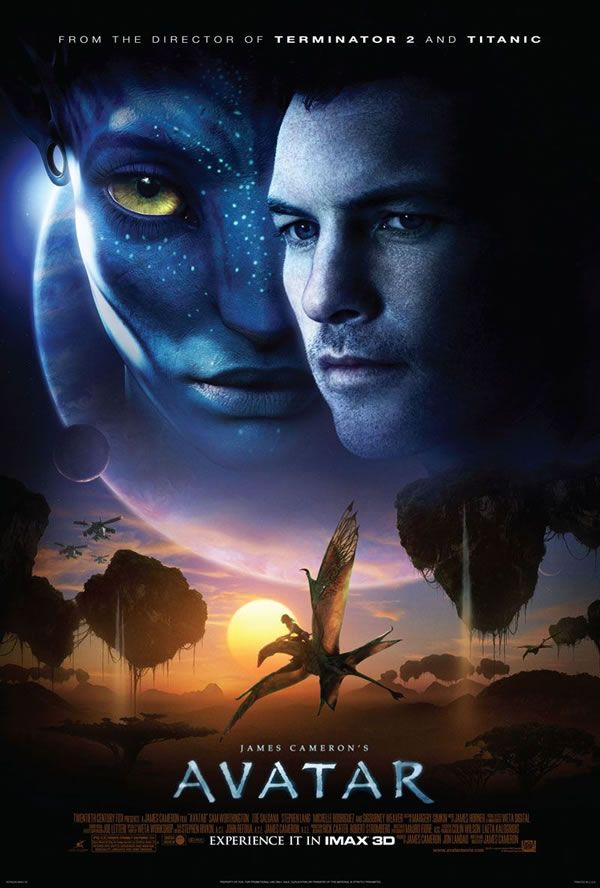
Avatar!


I had seen Avatar shortly after it came out, and then a second time in 3D. As awesome as 3D is, that movie carried such an awesome message in 2D. After the movie I couldn't help but be awe inspired at how well put together the movie was in regards to humans (Americans...North Americans..) effects on nature and how we need to become a little bit more 'biocentric'. On top of the environmental message, James Cameron definitely made a point that our invasive tendencies are terrifying and that we need to put ourselves in the shoes of invaded countries. Rewind 200 years or so when North America was being settled and the Native Americans were being pushed away, further inland away from their homes. Spiritual areas were probably lost to the European settlers, not to mention the assimilation practises that followed.

(Image taken Feb 1-2010 from http://collider.com/2009/12/09/6-movie-clips-from-james-camerons-avatar/)

Like what we discussed in class, the deep connection with nature was a big part of the Na'vi culture, as well as the whole planet of Pandora. Though in reality we wouldn't go as far as physically attaching ourselves to nature, but the message is very close. We probably should find a connection with nature to be able to understand the need for conservation in order to sustain ourselves and our descendants on this planet. The need to continually search for oil resources, pushing higher and higher into our Arctic, is proof that we will stop at nothing for money. Oil is our "Unobtainium", and the Arctic (or any other precious landscape) is our sacred tree that we must protect to maintain our way of life the way we know it. We need to realize how the changes in our climate and nature are going to affect us before it's too late and we have been "invaded" by climate change to the point of no return.

Summary - Selection 7

The Tragedy of the Commons by Garrett Hardin

The idea of the Tragedy of the Commons was easily described by Hardin as a herd of cattle, on land owned by a shared group of people. The problem is that the more cattle you add to your herd, the more money you make. As you add the cattle, other cattle owners will do the same. Now lots of money is being made, but at what cost? The land has been overgrazed, overused, and perhaps has even become to small to sustain this new cattle population. Like in other aspects of life, we are taking and using without thought of the consequences. Our land is suffering and our oceans are suffering. People think that our seas (or land) are inexhaustible resources and can be picked clean.

Pollution is similarly related to cost. Hardin notes that someone might find the cost of the discharge of waste is less than the clean up and purification process. Having to think about the cost and complexity of purifying the water deters that person from moving any further forward in a sustainable waste management. People will do something if they absolutely must (like paying certain taxes), but otherwise they would not do that particular thing. With such choice, life is easier and freedom is easier. People can reproduce however they please in North America, as it is our right to do so. We have nobody forcing us to stop reproducing because people have the right to chose, even though it may be largely affecting our huge families in the future.

It's almost the concept of greed. Because everything is so readily available we (or Americans) feel as though it's their right to whatever they want whenever they want because they area free country. Who cares about the consequences now? Drinking all the fresh water possible until it's too late. People will realize then that they should have considered the greater picture, and that doomed resources could happen sooner than thought. The long term consequence is easily forgotten as we continue to reproduce and consume. Hardin's solution to the "Tragedy of the Commons" is to take away freedom to reproduce, or at least the necessity to do so.

Blog Reflection 4

Biocentric all the way! All living things should be considered...humans, animals, plants...that is why I am in this direction of Environmental studies! Granted humans are more of a priority, but that is our dominance in nature, not our interconnectedness of all living things around us. A major point is that the world is not just about us! We do not need to be deeply connected with nature and the environment, but we need to have an understanding about what's going on. We have an interdependent relationship with the living things around us, and any missing link in the chain can effect us negatively. (Except the death of the mosquito, but I suppose if those disappeared there would be a long chain of outcomes), so YES biocentric, all things should always be considered for a sustainable future.